One Weird Trick
Lauren walks you through her process as she builds two decks from the same idea.

I’m a clip hunter. My favorite part of Marvel Snap is the creativity enabled by deckbuilding. I’m always on the lookout for more inspiration, and nothing inspires me more than card interactions. Today, I’m going to walk through my process of building a deck centered on a single interaction. Actually… I’ll build two!
The first deck will be optimized for the clip. I’ll take the interaction to the extreme to really highlight it.
The second will adapt the clip deck to be more practical. I’ll still build around the interaction, but I’ll sacrifice the biggest play to open up a wider variety of plays.
It’s the difference between winning bigger versus winning more often. Both routes are valid; it depends entirely on what play style you enjoy most!
The Basic Interaction
One of my favorite tricks is to repeat a card that copies other cards. You know the type.





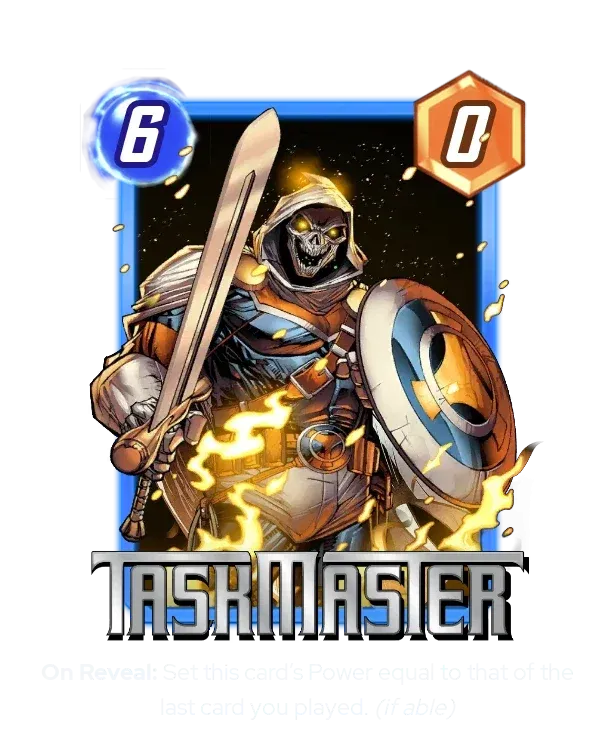
Here’s how it might go:
- Play Mystique, and intentionally whiff her ability
- Play Blue Marvel
- Play Odin on Mystique, and she will copy Blue Marvel’s text


How It Works
This trick depends on two different aspects of Marvel Snap.
The first is simple. All of these copier cards are On Reveals. That means you can repeat them with cards like Grandmaster, Misery, and Odin.
Mystique is my favorite of the bunch because most people think of her as an Ongoing card.
The second explains why Mystique doesn’t try to copy Odin. Cards aren’t considered played until they are completely done being played. When you trigger Mystique with Odin, she interrupts his ability before he’s done being played – so she copies Blue Marvel instead.
To drive that home, imagine if you had played Ironheart after Mystique. Odin would trigger Mystique, and then continue on to trigger Ironheart once Mystique was done doing her thing.
Why It’s Strong
Some interactions are strong on the surface level. Others are strong because they’re obscure. You can set them up right in front of your opponent and they won’t know what you’re doing. That’s especially strong in Marvel Snap where Snapping and retreating means some games are worth more than others.
Mostly, the repeat-a-card-that-copies-other-cards tricks falls into the latter camp. It’s common for opponents to Snap when you whiff something like Rogue, Chameleon, or Absorbing Man. It looks like you’ve either misplayed or drawn poorly.
Additionally, this trick uses weak turns to set up explosive final turns. That means you’re likely to have less Power on the board than your opponent. As such, your cards will reveal second on the last turn, which is often better than revealing first.
The Specific Goal
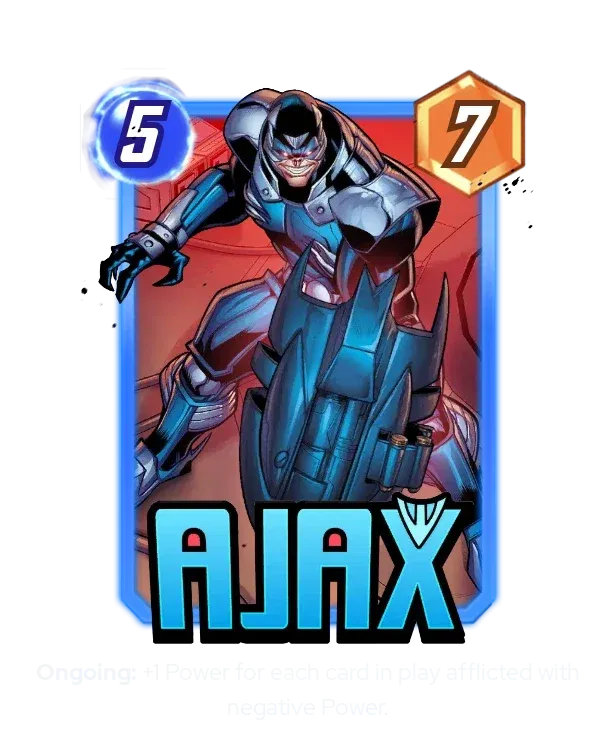
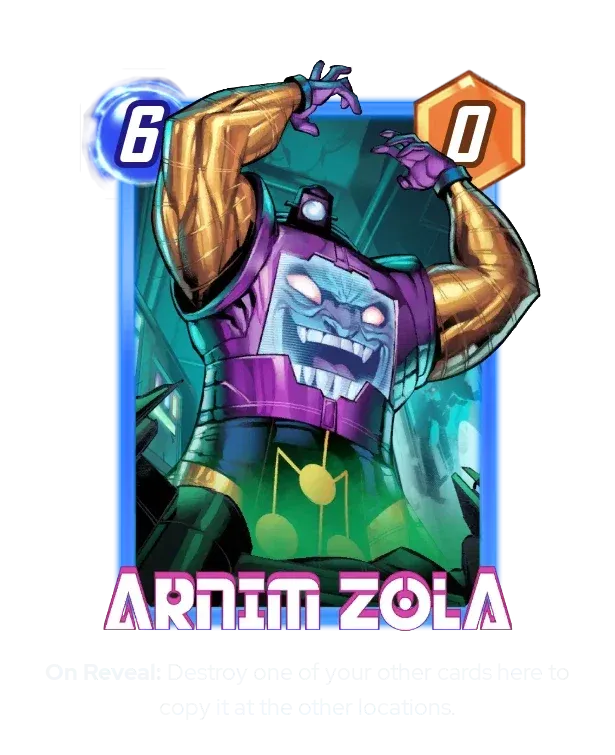
The exact interaction I’ll be building around today is similar to my first example, except instead of Blue Marvel, I’ll be having Mystique copy Ajax. Additionally, I’ll be using Arnim Zola instead of Odin to repeat Mystique’s ability.
The Flashy Deck
We have a basic game plan (Mystique → Ajax → Arnim Zola). We need to flesh it out.
My process is almost always to plan out the ideal play line, and then flesh it out with backup plans wherever possible.
This step varies wildly in how complicated it is. Sometimes the plan builds itself. Other times, it takes several sheets of paper to work out a path that will actually be playable.
Considering our core plan is only three cards played in ascending order of Cost, I expect it should be pretty straightforward. But let’s get into it and find out!
1: Planning the Core Line
Hazmat is the most obvious partner for Ajax. She afflicts the entire board, which maximizes his ability. We want to play her as late as possible to ensure she hits lots of cards. As I said previously, it’s likely our opponent will have priority on the last turn.

If we’re playing Hazmat on the last turn, we have to figure out when to play Arnim Zola. Do we want to play them on separate turns or the same turn? There’s a lot of advantage to playing them on the same turn: Zola is our big surprise and Hazmat gets more value the later she’s played.
Assuming we want to play them both on the last turn: how? I can think of three ways:
- Get extra Energy
- Discount Hazmat and Zola
- Play Hazmat early, but delay her using Invisible Woman, Malekith, or Supergiant
Some combos would force our hand, but in this case I think any of the three bullets would be doable. I’m slightly partial to the middle option – discounts. I see two advantages: higher surprise factor, and being able to draw combo pieces as late as possible.
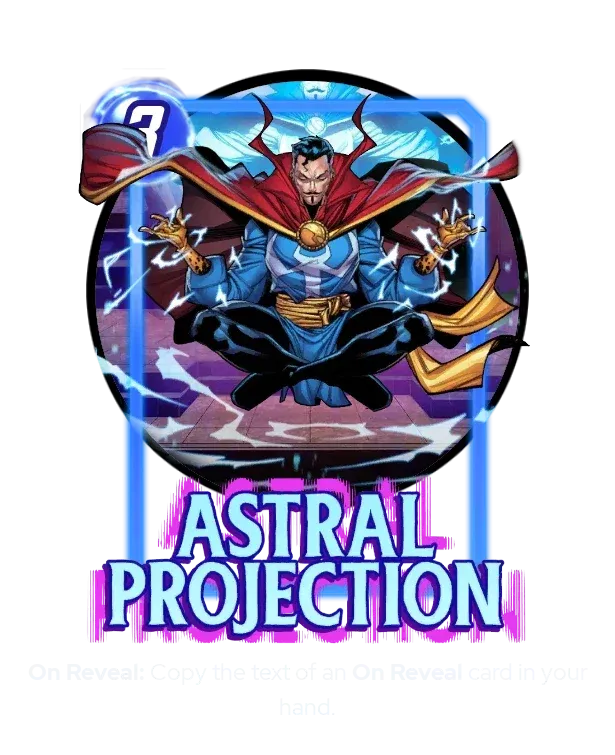
There are a bunch of solutions, but Astral Projection jumps out as the simplest. A single extra card lets us use Arnim Zola’s ability for only 3 Cost. That means we can play Astral Projection and Hazmat together on Turn 6. On top of that, there are 3 cards in the core combo that are okay to draw as late as the last turn. Being able to draw key cards later makes combos easier to pull off!
The downside with Astral Projection is needing to be careful how many On Reveals we put in the deck. We wanna make sure it copies Zola!
That’s all we need for the core plan. I think of it as a sort-of minimum viable product. If these are the only cards we drew, we could still do the thing.
- Mystique
- Ajax
- Astral Projection + Hazmat
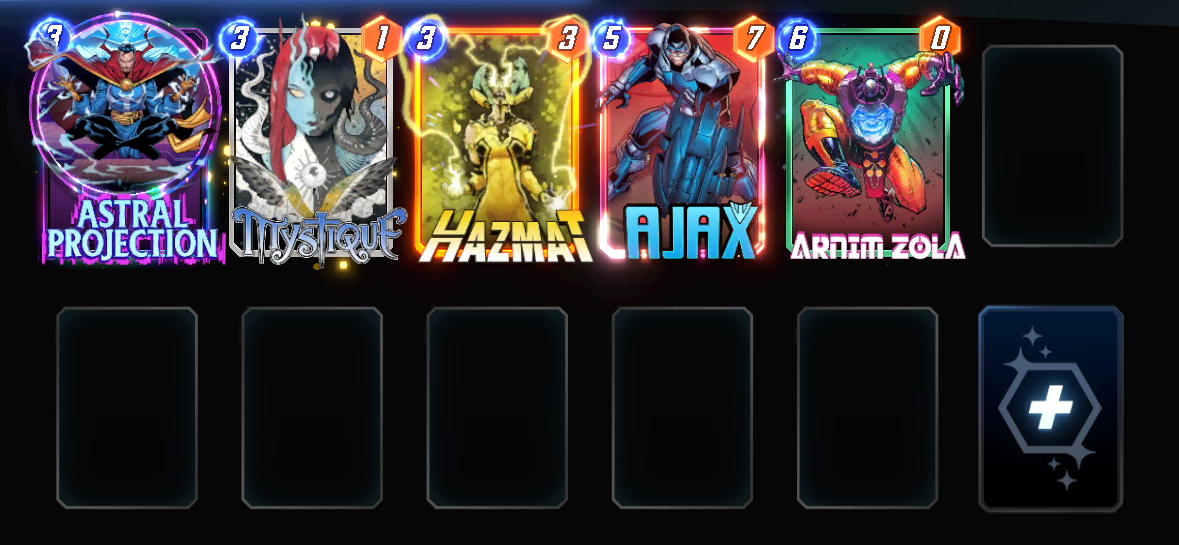
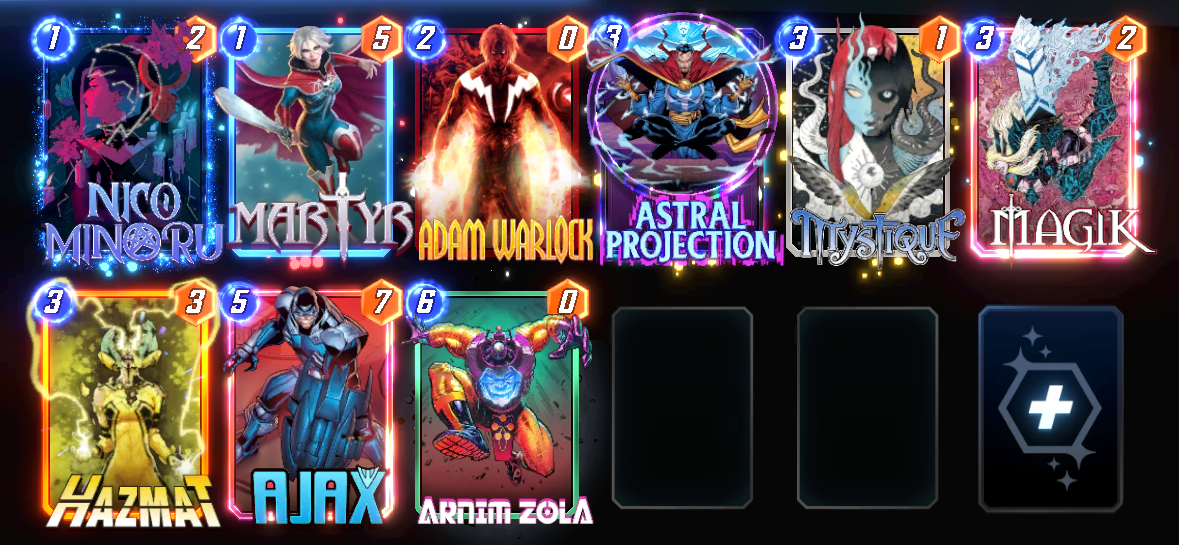
Here’s how our deck is looking so far:
2: Improving Consistency
Now we want to make our combo more reliable. This means finding backup plans and/or support such as discounts, energy, and extra draws.
There are no other cards that can do what Mystique, Hazmat, Ajax, or Zola are doing. There are some cards that overlap with Astral Projection (e.g., Stryfe and Dragon Lord), but they introduce other problems. Stryfe causes a timing problem (we need Zola to fire right after Ajax, or Mystique will target the wrong card). Dragon Lord has weaker targeting and introduces a 50-50 even when he pulls Zola (will Zola target Dragon Lord or Mystique?). They’re both more expensive.
Actually, our core plan is quite forgiving. It only takes five cards and we can draw them quite late (one by Turn 4, one by Turn 5, and three by Turn 6). Instead of redundancy, we want card draw.
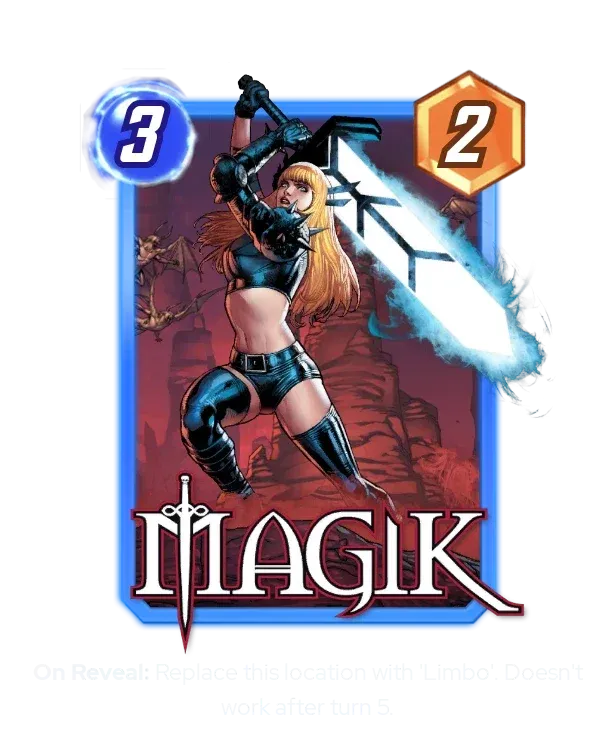
Magik is always the first place I turn if the plan can fit it. She represents an extra draw and 7 extra Energy. She fits easily with our plan – we can just delay everything by a turn. Also, it doesn’t matter if we play Mystique or Magik first.
Next, we’ll turn to my favorite card-drawing package. It’s five cards that are useful no matter how many you have room for. In order, it goes:
- Adam Warlock or Nico Minoru
- Martyr, Agony, or Black Cat
- Nico Minoru or Adam Warlock
- Yellowjacket or Crystal
- Crystal, Yellowjacket, or Wasp
That may look a little complicated, but I’ll walk through it.
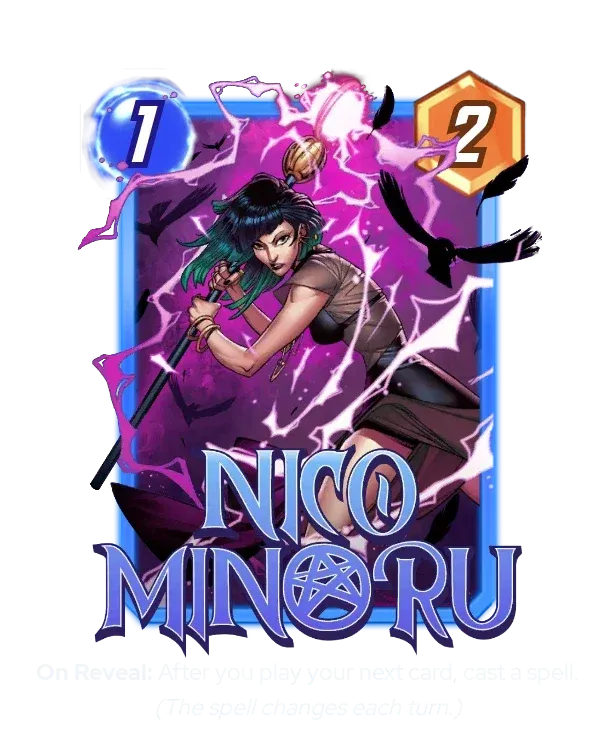
First is Adam Warlock or Nico. Both can draw cards without dedicated support. Nico’s usually better if you can only fit one, but Adam’s better if you can fit two. He may also take priority in a deck that has any cheap Power. I really appreciate Adam’s consistency compared to Nico’s 1-in-7 chance of having the right spell. Nico’s draw spell doesn’t ask us to win any location, though. It can almost always target Magik, if nothing else.

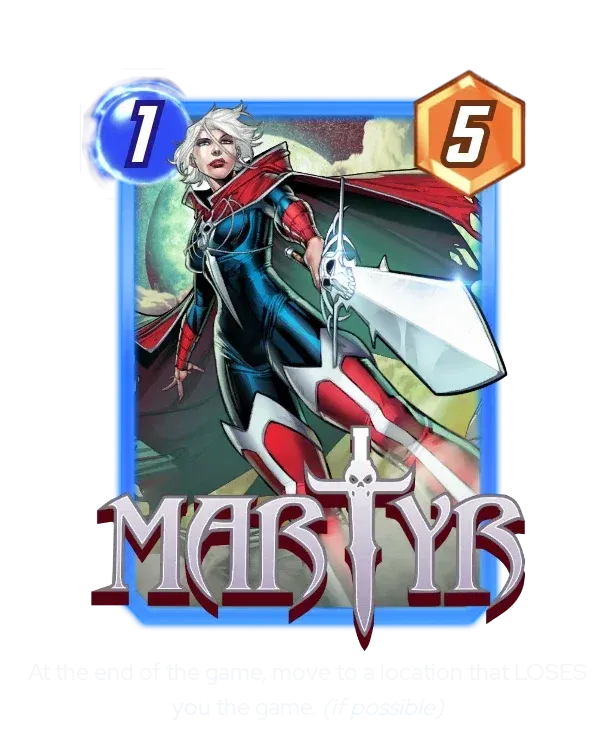
Second is Martyr, Agony, or Black Cat. All of these are cheap Power – making them great support to help either Adam or Nico draw. Martyr is my default, but I’ll choose Agony when board space is tight, or Black Cat when hand space is tight.
Note: Martyr has since been buffed to 6 Power and Agony was nerfed to 3 Power. These changes don't affect when I'd use them.


Third is to grab the card you skipped in the first slot (Adam or Nico).
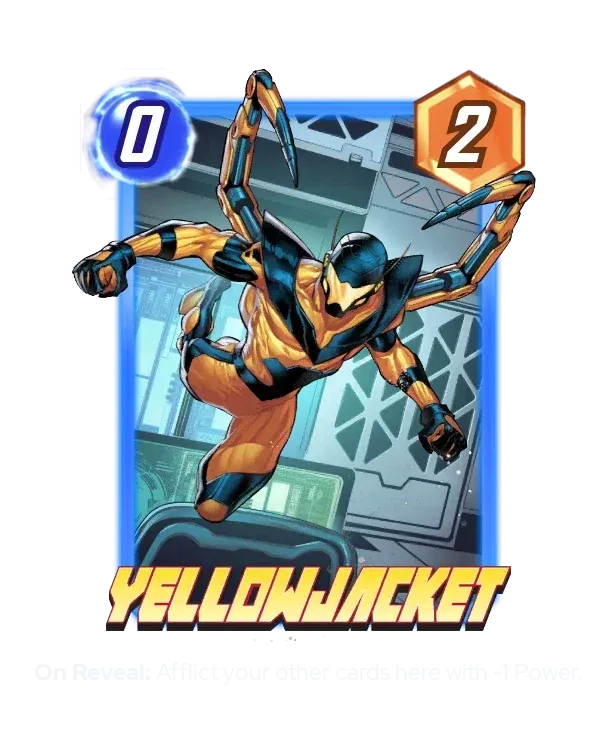
The fourth and fifth slots go to Yellowjacket and Crystal. If you can only fit one, it depends on what the rest of the deck looks like. Yellowjacket is cheap Power just like the cards from the second slot – excellent support for both Nico and Adam. Crystal’s usefulness is obvious, but she’s the most expensive of the bunch. If I can spare deck space but not Energy, Crystal might be Wasp.
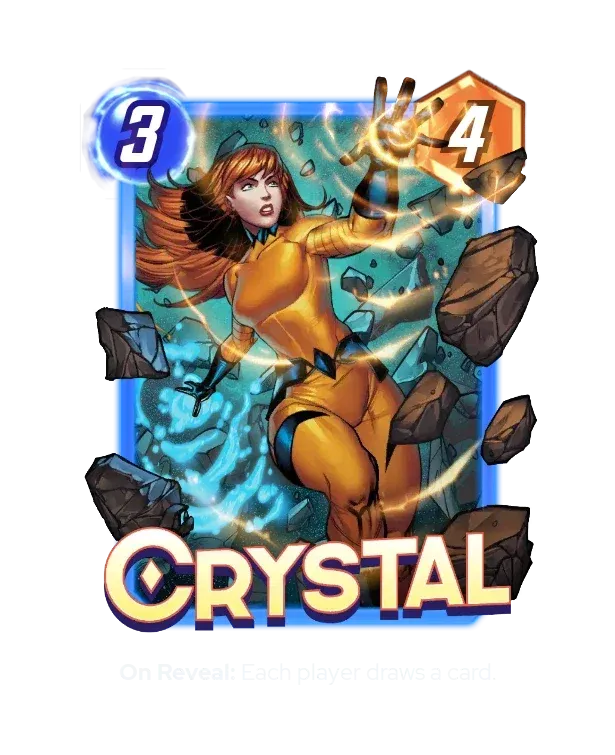

In this case, we have tons of room so I’m grabbing the first three. We’ll come back for more if we have room. Between Nico, Adam, and Magik, we just added tons of draw power. Nico and Magik introduce the risk of being targeted by Astral Projection, but this is outweighed by how much they help the deck’s consistency. Also worth noting that Nico’s pretty easy to squeeze into Turns 4 or 7 if needed.
3: Being Extra
Now that the combo is looking pretty reliable, it’s worth looking for bonus cards. These make the combo more extreme, but we’ll be perfectly content if we pull off the combo without them. They’re just spice.
In looking through other cards that synergize with Hazmat and Ajax, Diamondback stands out as a great bonus card. I really doubt we’ll need her 5–11 additional net Power, but it couldn’t hurt!
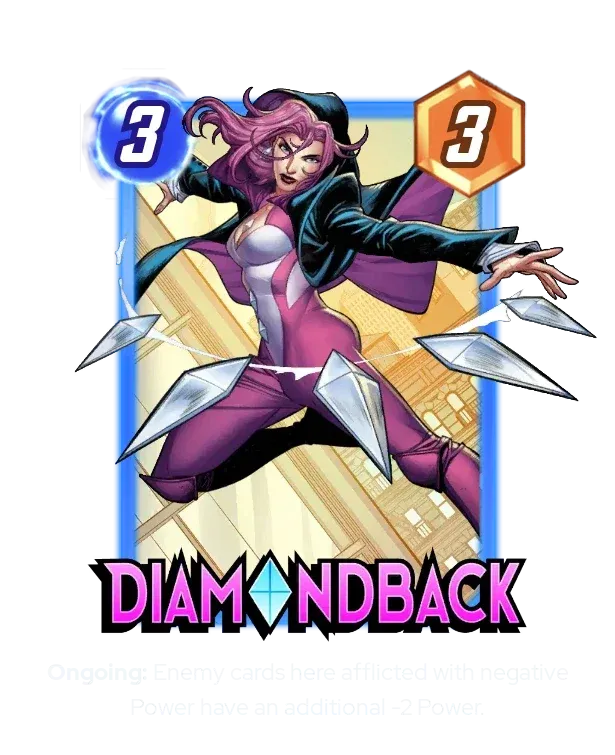
I briefly considered that she might be an even better target for Mystique, but it’s almost certain that Ajax’s ability will be bigger.
4: Finishing the Deck
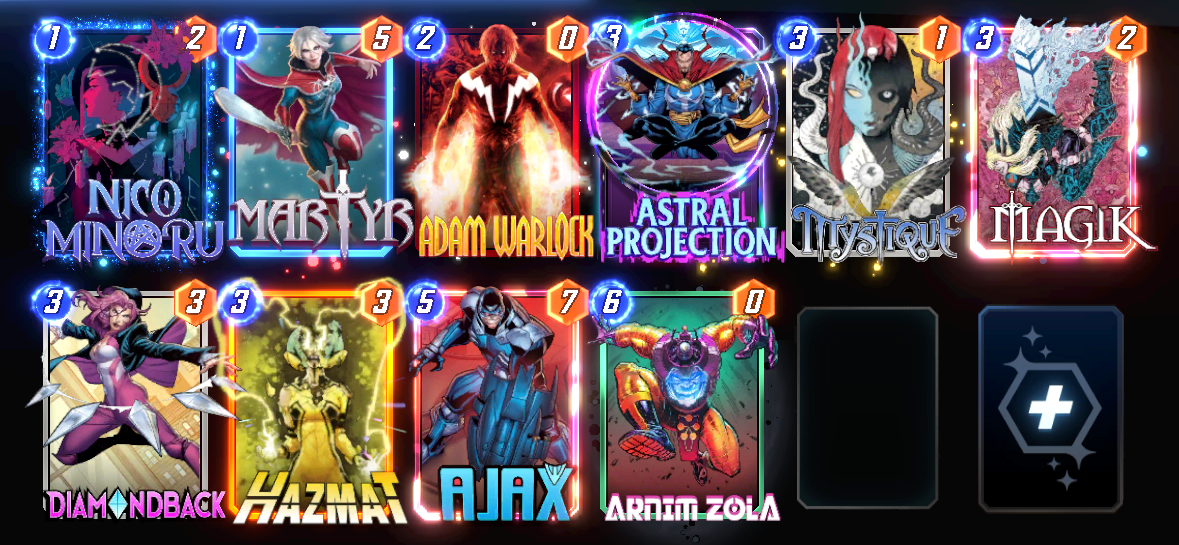
All that and we still have two open spots in the deck! Most combo decks have the opposite problem, and then you have to make tough cuts!
There might be some other cards that could work as redundancy or spice, but I’m wary of messing up the combo.
As we plan envision the full combo, the board’s looking pretty tight on space. Adam, Martyr, Diamondback, and Mystique in one location. Magik, Ajax, Hazmat, and Mystique in another.Additionally, our curve is looking pretty tight – which means additional On Reveals pose a real risk of distracting Astral Projection from Arnim Zola.
- Martyr
- Adam Warlock
- Magik
- Mystique
- Diamondback
- Ajax
- Astral Projection + Hazmat
We have some wiggle room. For instance, Turns 3–5 can go in pretty much any order as long as we avoid Mystique copying Diamondback. Even so, we’re pretty short on energy overall. Something like Malekith feels risky.
We could probably add Luke Cage as an alternative bonus card to Diamondback. However, he’s probably a net loss for us. If we end up with three “Ajax” cards on the board, then every Hazmat hit on our own cards is worth +2 Power overall.
I sincerely entertained 1-Cost Skills at this point (to avoid filling up the board), but they’re On Reveals! Ultimately, I’m turning to two more draw support cards. We can’t afford Crystal (plus she’s an On Reveal). Yellowjacket is an On Reveal, but being totally free means we can play him in the Astral Projection lane after Astral Projection, even without Limbo. Agony largely avoids the board space problem (and is not an On Reveal).
Here’s our final deck!
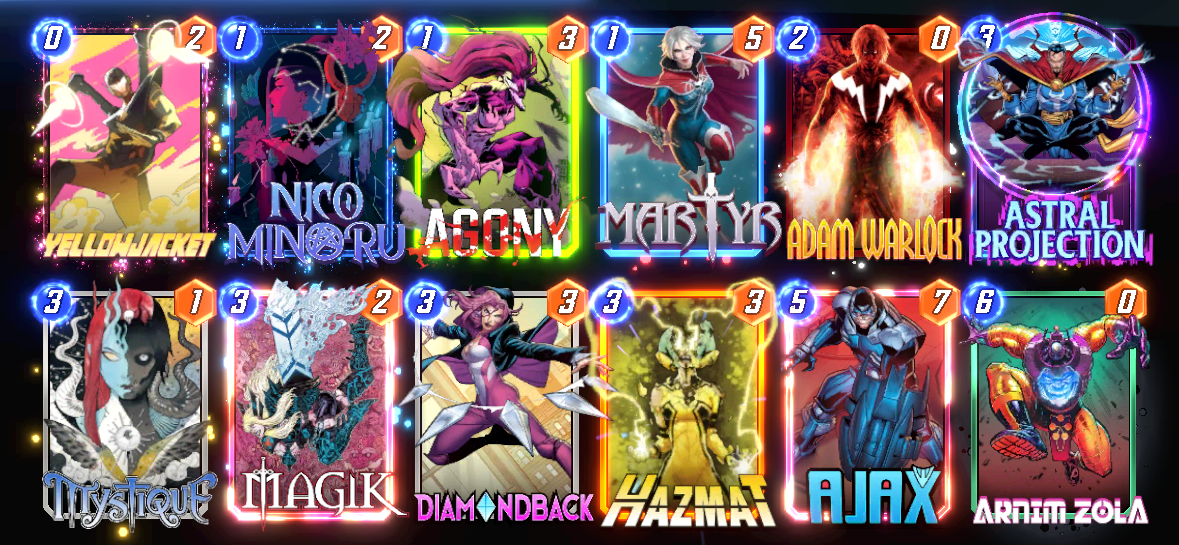
The Hunt is On!
Time to play some matches and try to pull off our big combo!
Of course, I ran into some bad draws, harmful locations, and opponent tech cards – but it actually didn’t take long to hit at all! Just five or six games. Here’s how the final turn played out. Look how big the point swing is!
The deck actually feels decently strong. The combo is easy enough to pull off that I think you could climb with good Snap and retreat discipline. That said, relying on one single multi-card combo means it requires a bit of luck and is fragile to tech.
Let’s adapt it to be better for climbing.
The Competitive Deck
We could just go grab any Ajax deck, but most of them aren’t running Mystique right now. The point of this exercise is to build around an interaction, so let’s retain Mystique and the ability to delay her ability.
In fact, delaying abilities is pretty great for Affliction decks overall. There are a bunch of cards we’re happy to play early but wait until the last turn to reveal.
1: Another Core Line
Arnim Zola feels like overkill, and only works with one specific combo path. Let’s cut him and Astral Projection from the core.
That leaves us with just Mystique, Hazmat, and Ajax in our core.
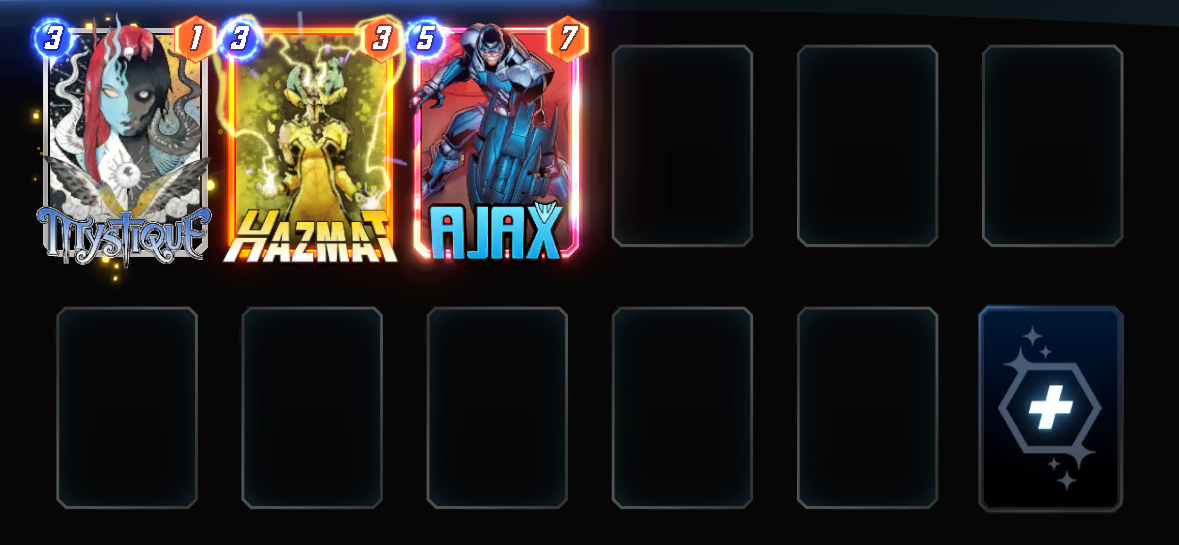
2: Backup Plans
As I said before, we can improve reliability with backup plans or support cards.
This time, we’re not relying on a single specific four-piece combo. That means it’s much easier to find backup plans.
And let me be clear – we’re still (mostly) relying on one card: Ajax. That’s okay. We have a 66.7% chance of drawing him by Turn 5, or 75% by Turn 6. That’s plenty if our critical card is powerful enough.
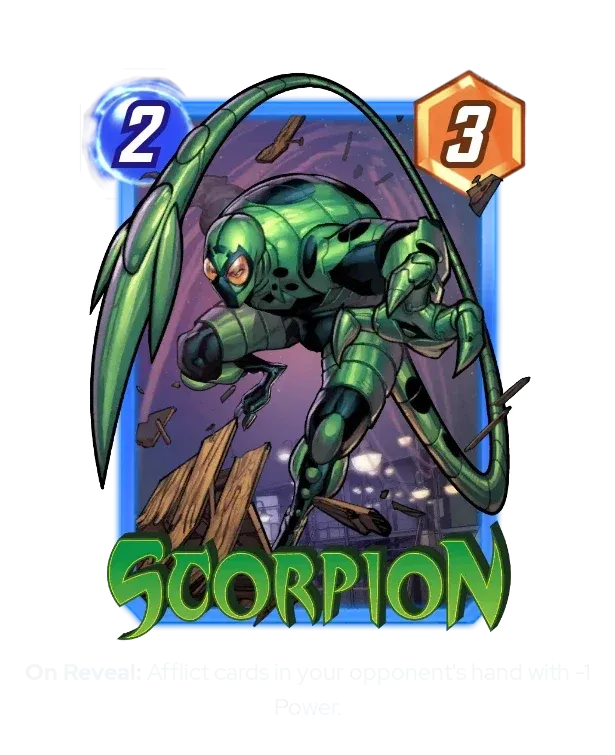
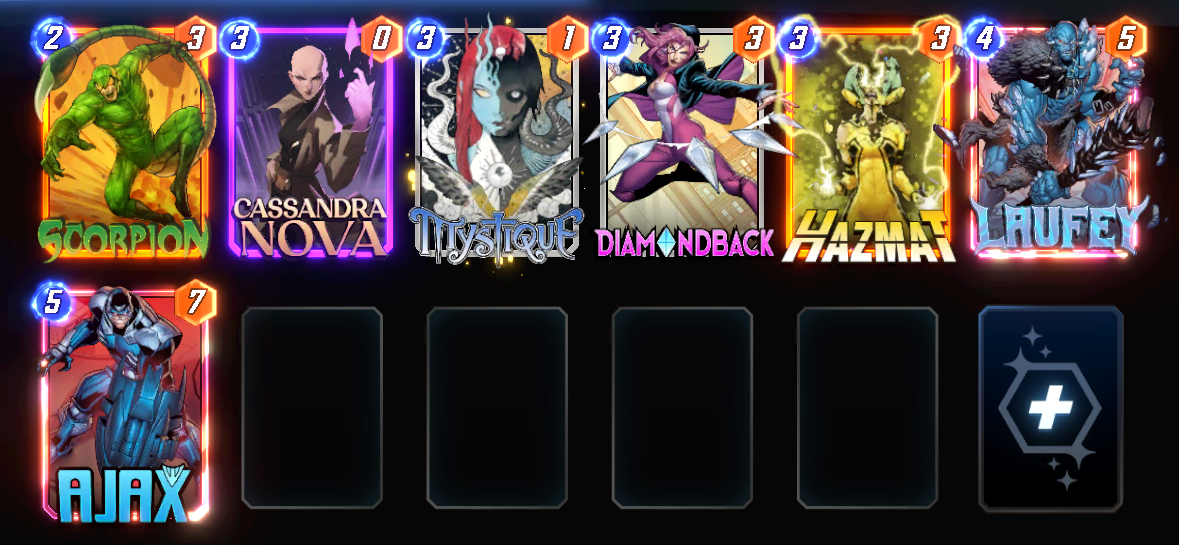
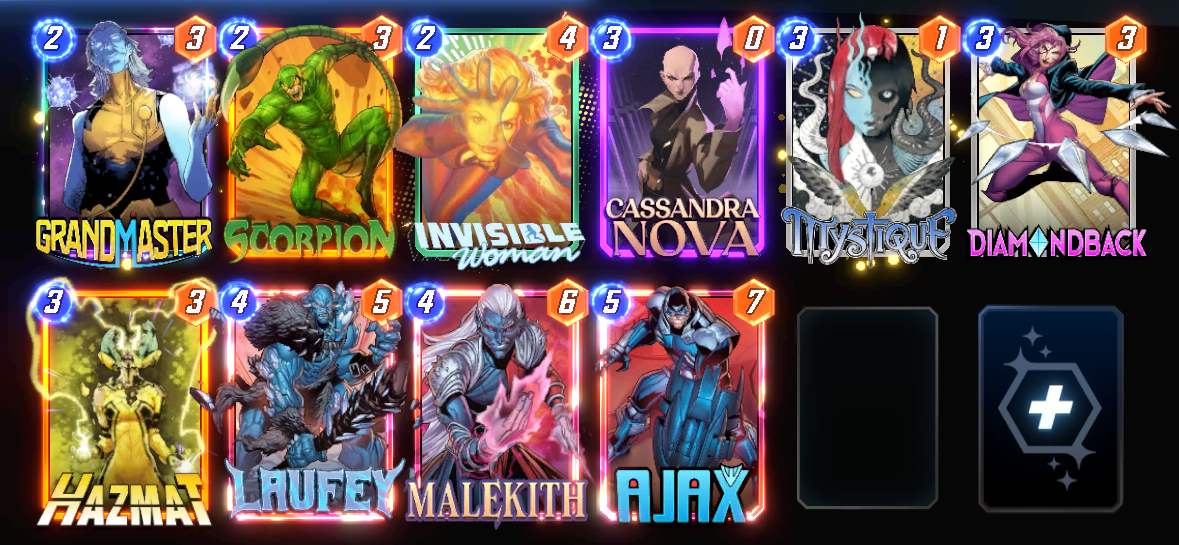
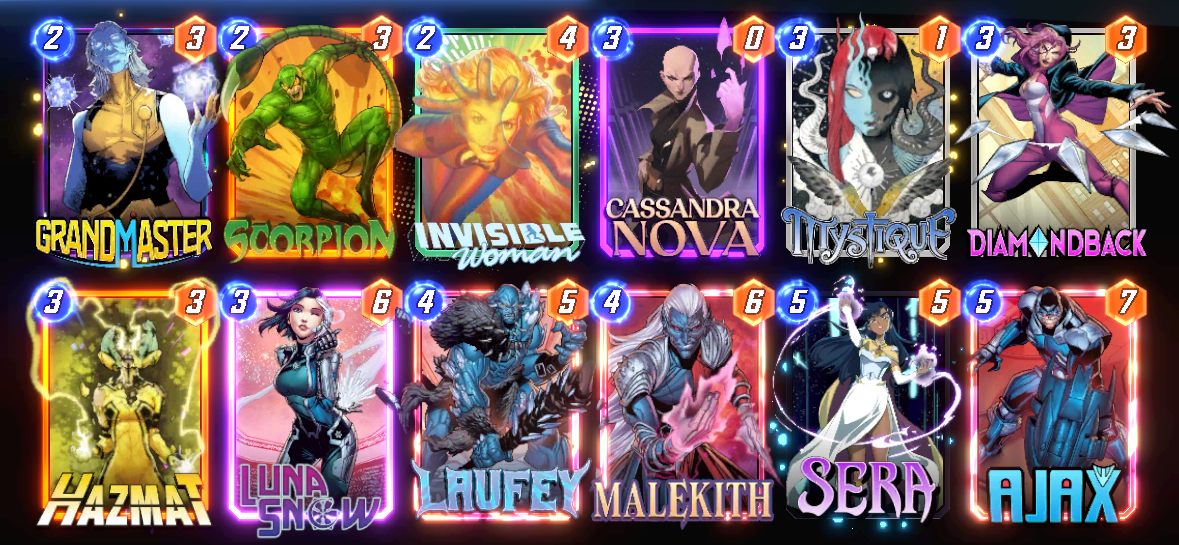
Let’s add some ways to afflict cards for Ajax in case we don’t draw Hazmat. Scorpion and Laufey are both great for this job.

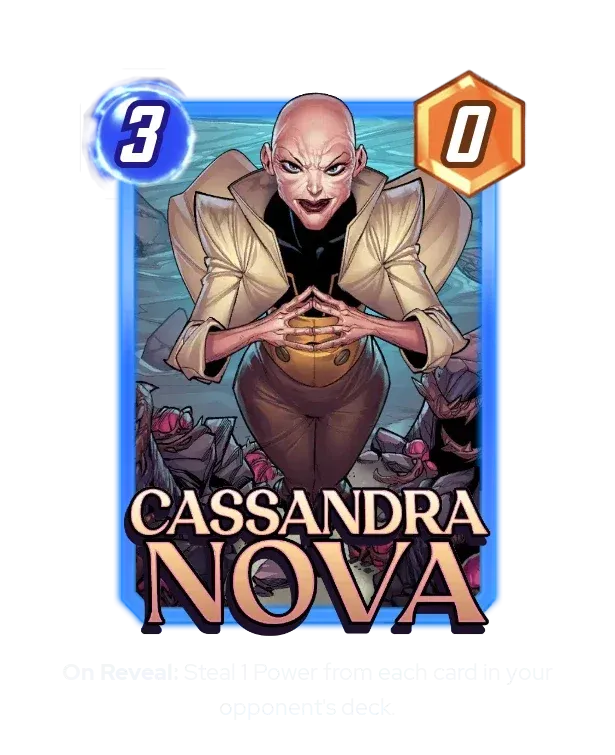
We could also consider Red Guardian or Cassandra Nova. Red Guardian gives us tech, Cassandra Nova afflicts more cards and gives us more Power. This one will depend on your play style – I’m partial to focusing on my own game plan, so I’ll go with Cassandra here.

Finally, I want to bring back Diamondback! She is a great Power boost in any lane we afflict. She is also another target for Mystique. That’s not something we’ll use often, but it could win a game when draws make it hard for Mystique to copy Ajax!
3: Supporting Our Plan
Next, we’ll add some cards to support our plan. We still don’t have a way to delay Mystique. That’s not absolutely critical, but it’s the plan we’re building around!
The obvious options are the cards that will push Mystique’s On Reveal to the end of the game – Invisible Woman, Malekith, and Supergiant.

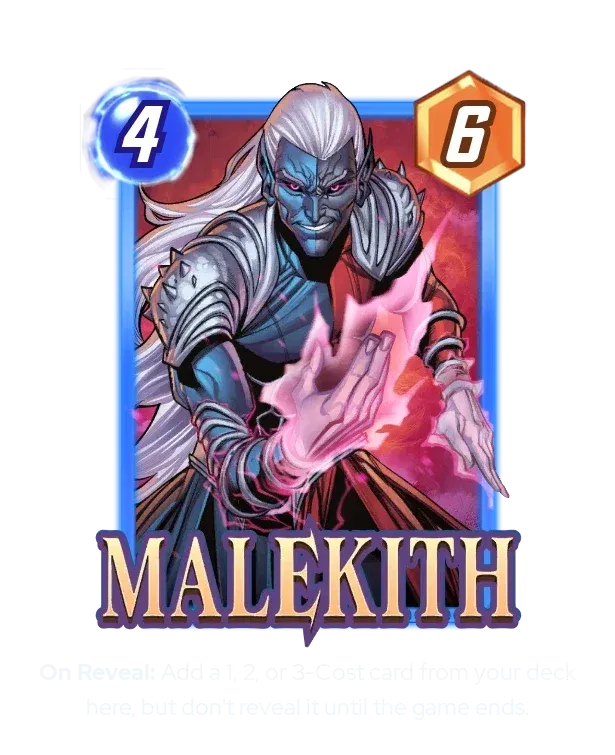

I’m lowest on Supergiant for our deck because she messes up our game plan. She makes it really hard to arrange our cards so Mystique and Hazmat go off after Ajax. I might consider her if we were keeping Magik – the curve would work out better, and playing Supergiant on Turn 5 protects Limbo for location changers.
The other two could work great. We have full control over what goes behind Invisible Woman. With Malekith, we can see what card he pulls and play out the following turns based on that knowledge (e.g., if he pulls Mystique, we want Ajax or Diamondback to be the last card we play in the game).
Finally, I’m really interested in Grandmaster as another way to delay Mystique. This actually might be the thing we use him for least often, but it could still be a good surprise sometimes!
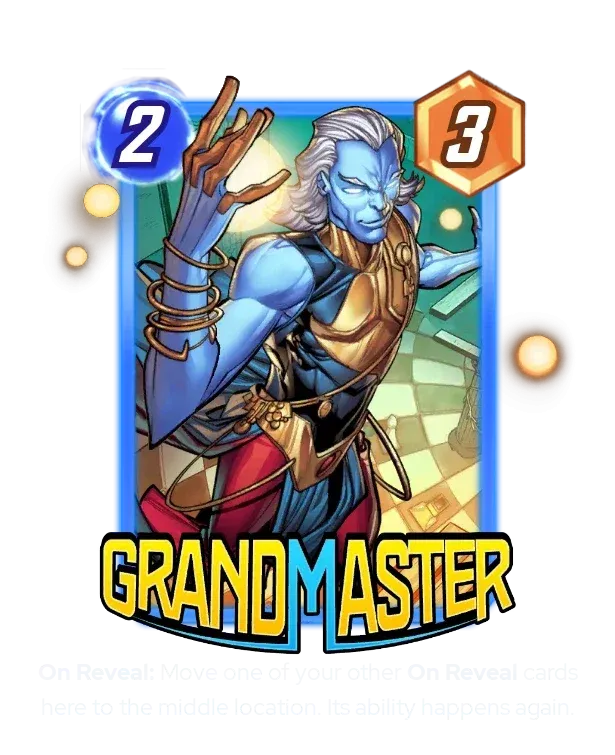
Grandmaster could work for extra affliction with Scorpion, or extra surprise with Hazmat, too. I really like him for Cassandra Nova and Laufey. He makes them big enough threats to possibly win a lane without Mystique. Laufey especially is a great target so he can afflict several more cards for Ajax. Ultimately, Grandmaster offers us more outs when Plan A isn’t going well.
4: Is It Time For Tech?
So… I’ve already skipped on two great tech options that might have had proactive synergy with our plan (Red Guardian and Supergiant). Is it finally time to add some?
Yeah. If you want it, this is the time to grab a card or two that addresses the types of decks you’re missing most. Or maybe the decks that give you the hardest time. Maybe a Rogue to deal with Luke Cage?
Again, this comes down to play style. As much as I do actually enjoy playing the perfect tech card to counter my opponent, I just prefer focusing on my own sandcastle.
There’s not any other tech that strongly supports our deck, so I’m going to reach for even more support.
In this case, I’m thinking about some extra Energy or discounts. Our plan is pretty tight, so wiggle room could open up even more escape hatches when things go wrong.
Consider Luna Snow and Sera. They’ve actually been played in meta Ajax decks before, but they have even more synergy with the one we’re building.


Having an extra Energy from Luna’s Ice Cube let’s us play Ajax and Grandmaster on Turn 6. Suddenly, investing in an early Mystique makes sense again! It adds to the surprise element and also lets us draw Ajax a turn later. Or, having that extra energy on Turn 5 could let us play both Mystique and Hazmat behind Invisible Woman (again letting us draw Ajax a turn later). Finally, the Ice Cube itself is an extra body for Hazmat or Laufey to afflict.
Sera offers similar perks. Sera lets us play both Ajax and another swingy card on Turn 6. That could be Mystique or Hazmat (hopefully the other is queued to flip at the end of the game). It might also be Grandmaster to repeat Laufey.
And then consider Luna and Sera together! Luna lets us play Sera a turn earlier (huge!). If we have both Luna and Sera, we can have an especially spicy last turn: Ajax, Mystique/Hazmat, and Grandmaster!
Off to Ranked Mode!
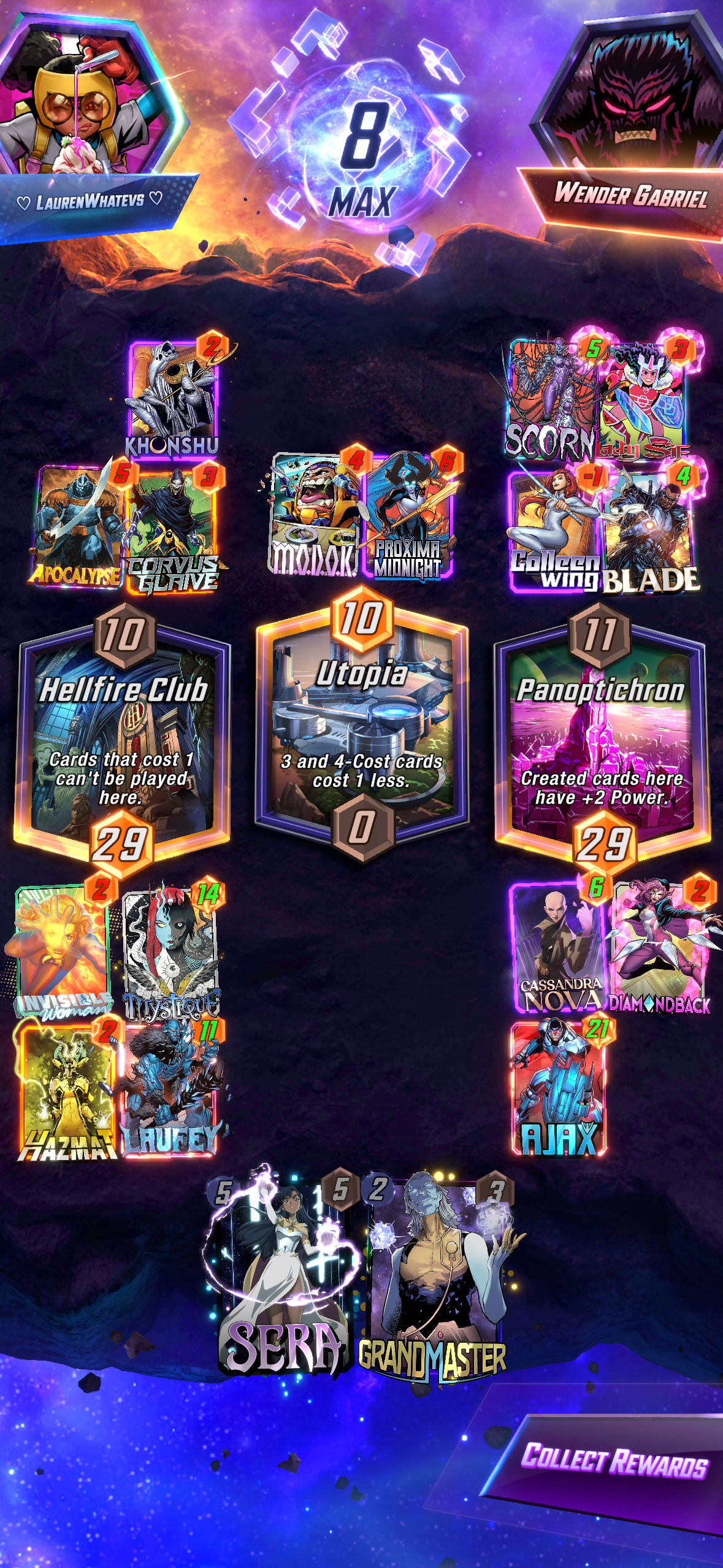
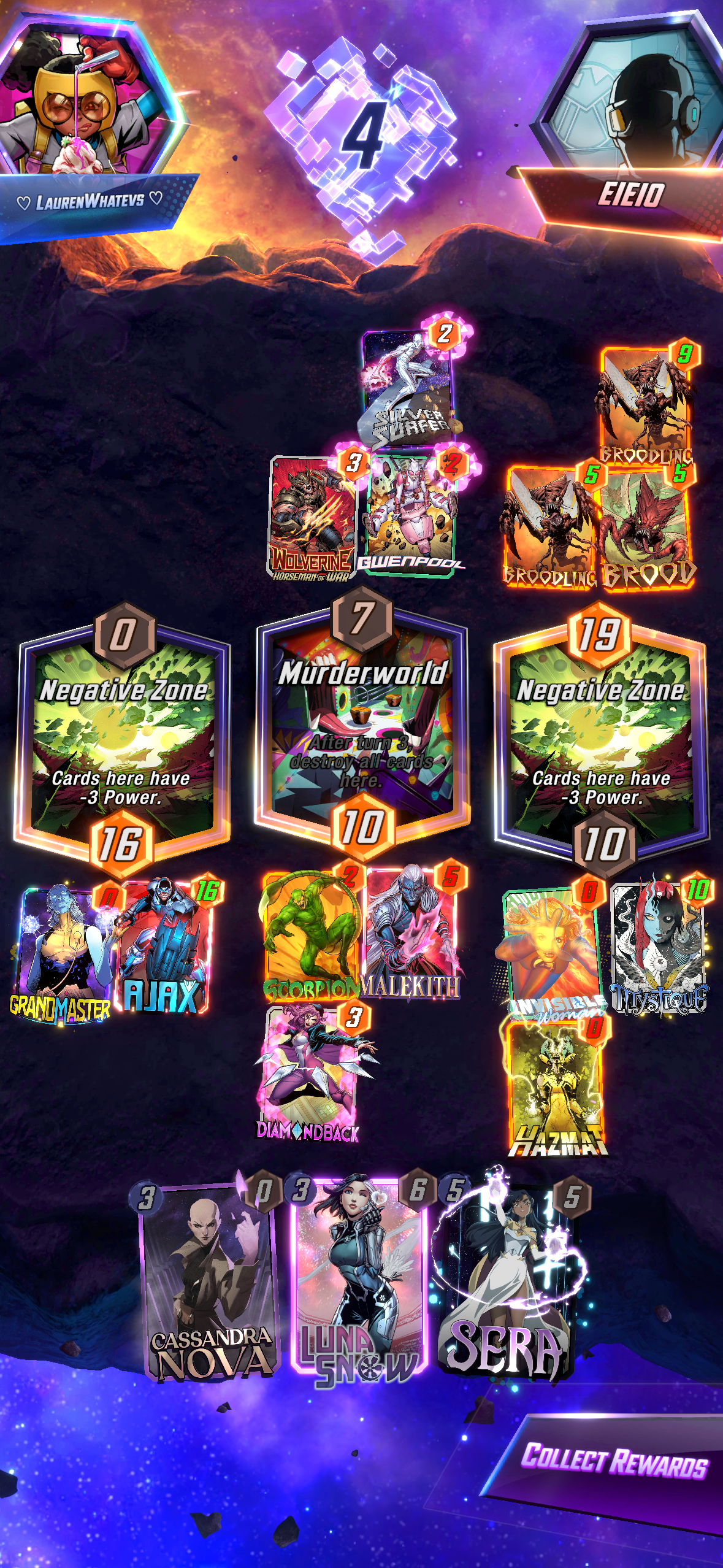
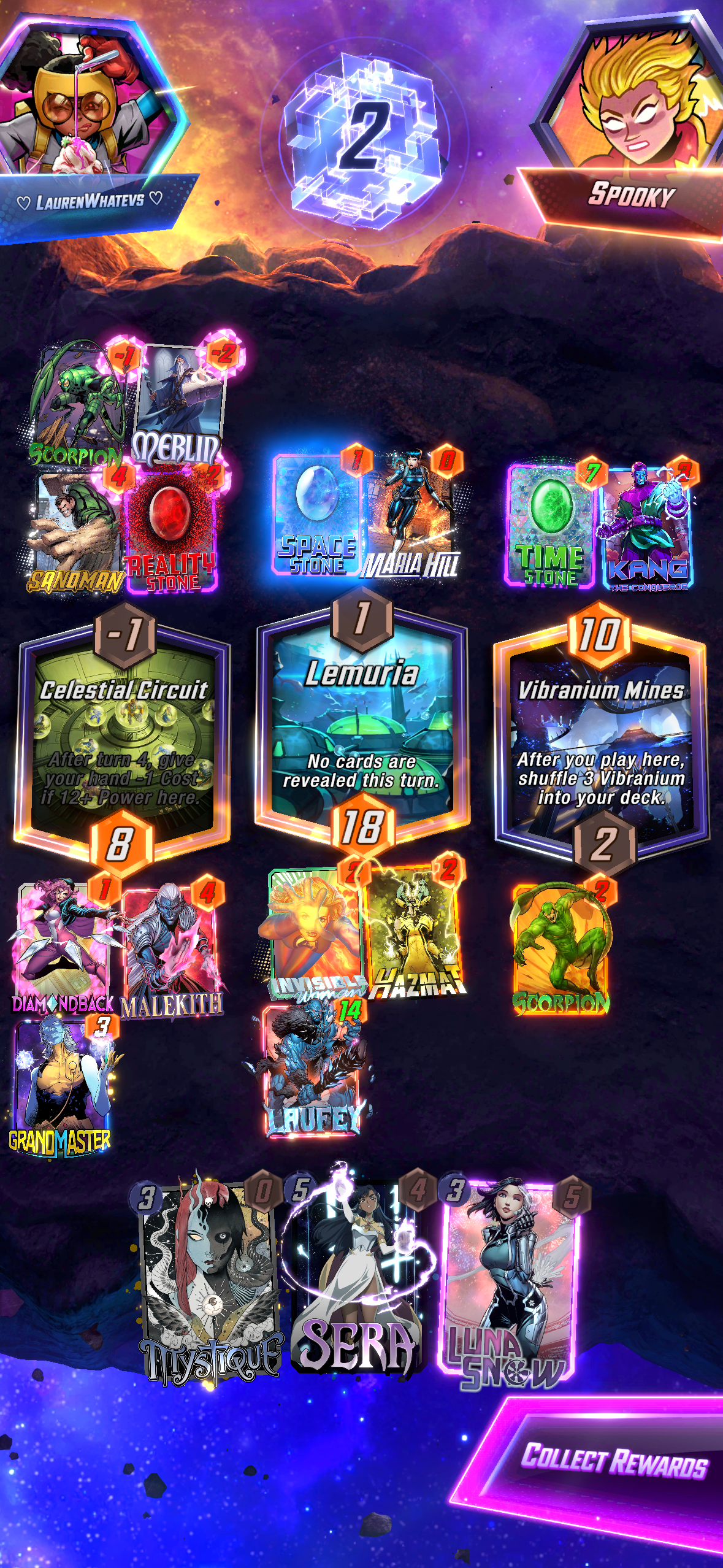
Testing the deck in actual games is super helpful for tuning it! I often end up iterating on a deck once I see it in action (including clip decks). In this case, I did actually try a few of the other options discussed above (Red Guardian, Magik, and Supergiant). They worked fine, but this set has felt best so far!
I meant to play a dozen games with it, but ended up playing 40 since I was having so much fun with it! I won 21 games and netted 35 Cubes. A 53% win rate is so-so, but 0.88 Cubes per game is pretty good!
Conclusion
Building around an interaction remains one of my favorite ways to play Marvel Snap. Deck-building is always like solving a puzzle, but never more than when you’re building with such a specific goal in mind. Solving that puzzle feels great.
I always enjoy hearing how somebody else approaches deck-building. Everybody does it differently, so I learn something new every time! I love how much creativity and personality can be expressed even with a small deck of twelve cards. Hopefully this gave you some insight into my approach to deck-building, and maybe you learned something, too.
Most of all, I hope you feel encouraged to build a deck based on an interaction you love. There’s something special about playing with a deck that you made (even when it’s not the strongest). Stretch your creative muscles, try something weird, and enjoy the process!
This article was featured in-game by Second Dinner during Steam’s Deck-builders Fest.