Keyword Consistency
Primary Functions of Cards & Locations


We could all benefit from a comprehensive classification system. Here's one!
There are only two types of cards in Snap, Characters and Skills. Such a narrow classification is of little help when it comes to organizing hundreds of cards in a structured, useful way, something a gaming community naturally needs. This is why we all default to a range of keywords found in card texts when deck-building and, perhaps more critically, when discussing the game.
However, as useful as they may be, those terms come with a number of complications too.
This terminological imbroglio inspired this essay. It paints a portrait of the current situation before unfolding with an original set of identifiers that could resolve the issue. Built on an accessible, practical vocabulary, this proposition offers the added value of characterizing both cards and locations!
To fully appreciate the value of such an effort, a lengthy detour is warranted. Feel free to instead skip ahead to the Primary Functions section for a much shorter, straight-to-the-point read.
A Way with Words
What exactly is a keyword when it comes to Snap? It is essentially a textual cue for possible interactions with cards and locations. Does it have anything to do with the words in bold located at the beginning of card texts? Yes… and no. Consciously or not, players have figured out that there are in fact two types of keywords in the game: official ones, highlighted in bold (hereafter identified KW), and unofficial ones (kw), which are embedded within card texts.
Both KW and kw make for the terminological hodgepodge we've all come to consider normal. (If you don't feel the chaos, you should by the end of this text.)
Let's take a deeper look at each group separately, starting with KW.
The Occurrences (Occ.) Cards column counts the number of times a KW appears, as more than one KW can be found in a single textbox. This can obviously prove problematic when it comes to using them for classification purposes, given that it implies a single card can bridge multiple categories. It is also why my proposed nomenclature refers to the primary adjective of a card or location. There may be more than one ability/effect at play, but there's usually one that holds more weight. (Note that the Part of Speech column is only there to illustrate the higher consistency of my proposition.)
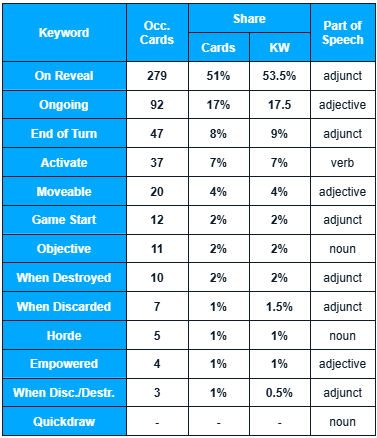
If the above are united by bold text, they're divided by quite a few things:
- Objective and Game Start: what separates them from the others is the absence of synergistic potential: they do not interact with any other cards' ability, and may in fact never do so, depending on cards released in future. Which begs the question: why highlight those, then? Preparing the ground for future opportunities? One can hope so. Developing cards that interact with Game Start and Objective certainly presents a serious creative challenge, though I believe that Quickdraw should fare better in that aspect in the future.
- Horde and Moveable: unlike the other KW, both of those may appear in front of text or inside it (there are some rare exceptions like Boomerang, Mysterio, Sam Wilson, etc.). Only 5 cards and 2 locations contain the Horde KW, which makes for a very low-synergy KW with no new cards for almost a year (I have a feeling that could change this October however). As for Moveable, it may refer directly to other cards with Moveable in their text (as of now, only Aunt May and Spider-Sense do so).
Only one anomaly remains… and this one's a doozy!
I Got the Power?
Empowered has found itself in a weird predicament since its inception: not only is it the first KW that is not designed to be–and in fact can't be–located at the beginning of a card's text, it also always synergizes with abilities that don't directly refer to it.
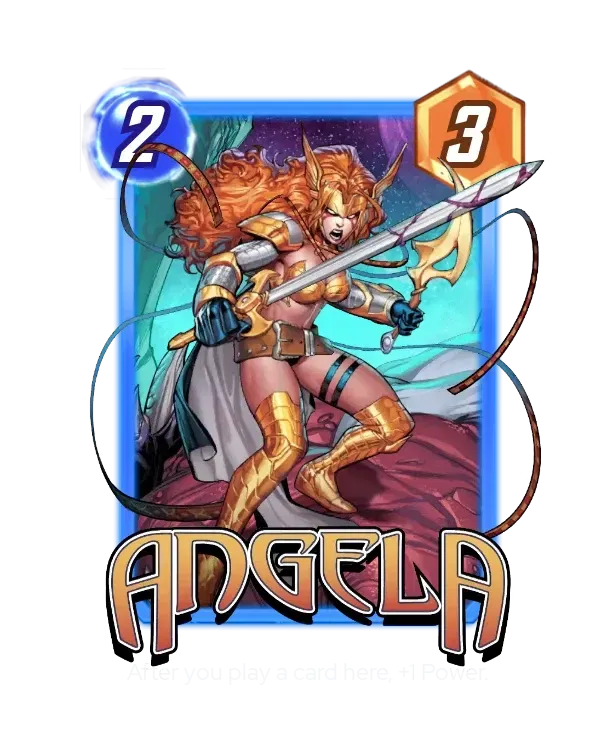
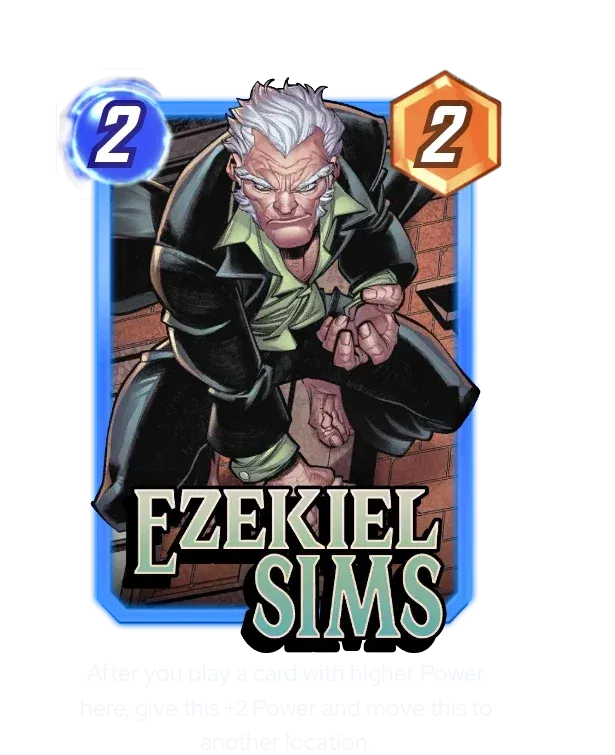
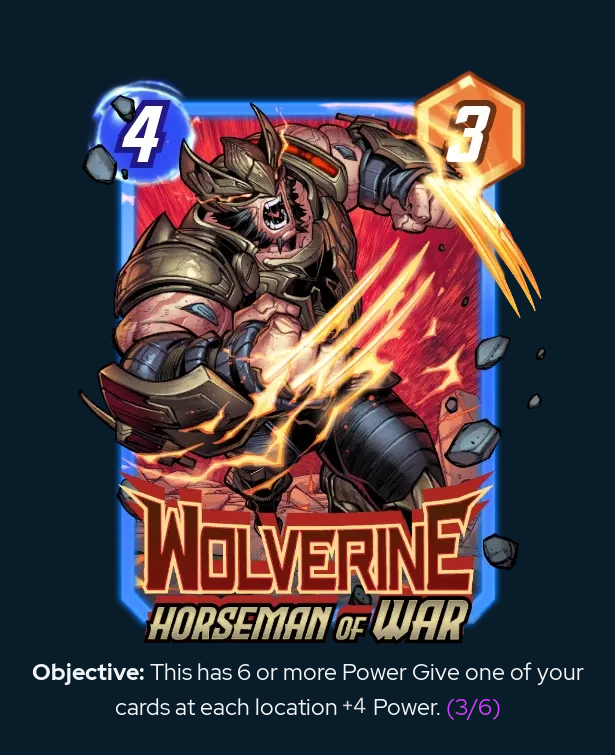
Angela's text doesn't say it's Empowered +1 when her condition is met; it only reads+1 Power. We give +2 Power to Ezekiel before he changes location. In Wolverine, Horseman of War's case, the notion of empowerment hides in the subtext, his ability triggering when he's in play and has (at least) 5 Power instead of its base 3. Despite this, they all synergize with cards that refer to Empowered.
This inconsistency makes it more difficult, especially for less experienced players, to fully harness the potential of that KW. One can't even rely on the +x Power cue to identify synergistic cards, as shown in the above Horseman of War example. Indeed, knowing that any power gain that doesn't come from an Ongoing card is Empowerment helps… yet that information is hidden in a tooltip, and there is currently no information about location effects…
This is not ideal.
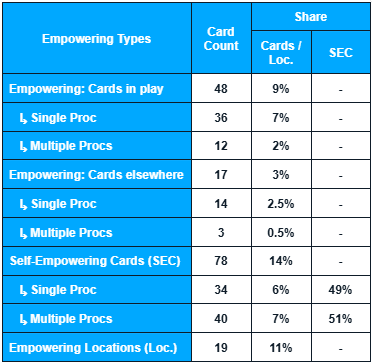
Obviously, changing the text of all cards minus Skills is not an option. Even the editing of self-Empowing cards would be a considerable endeavor, as the table below shows. This could prove especially problematic due to the limited real estate in card descriptions. In some cases, it would reduce text size to the point of illegibility when playing on a phone: Drax Avatar of Life, Galactus First Steps, The Sinister Six…
Then comes the proccing (triggering of ability) aspect. Some cards will only proc once according to their text, while others allow for two or even theoretically infinite procs. So, once again, one must go a bit further to make sense of the KW's synergistic value:
Snappers who monitor datamined content may have noticed that the developers faced some hurdles when workshopping the KW: for a while, the adjective was called Boosted.
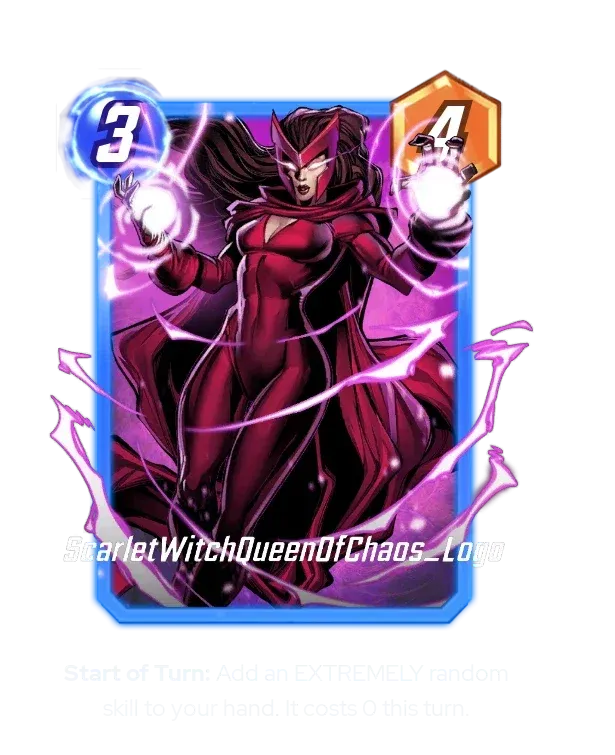
Venus, for instance, went through at least two rewrites in the span of about two months. Originally phrased When you boost a card in play, it gets an extra +1 Power, it was changed for When your cards in play are Boosted, they get an extra +1, before being modified a final time to become When your cards in play are Empowered, give those cards an additional +1 Power six weeks prior to release.
That belated change of heart isn't hard to understand: Boost does not convey the notion of (added) power at first sight. Yet, given enough time, it could have become that short, catchy term suited for editing and harmonizing the text of self-empowering cards. On another note, they should have kept extra instead of switching for additional: half the letters to convey the same information! When space is scarce…
Maybe Missing
If End of Turn exists, why doesn't Start of Turn? If Game Start exists, why doesn't Game End? There are existing cards that could feature either of those KW.
I asked the developers about this a while ago and they responded:
We're being conscientious with making new keywords, as a change in card text with no functional change has a real cost in making players memorize the new text and parse what the new keyword means. We try to stagger their rollout and make the change meaningful by pairing them with the release of new cards that interact with that mechanic or putting them ahead of seasons that do so. (Discord)
While I can appreciate their reservation, I am quite skeptical about their rationale.
Firstly, the real cost of updating the text on a handful of cards would most likely be negligible and potentially compensated through cleaner texts and added consistency. Secondly, there would be no memorizing (is there ever?) or parsing (that's rich!) required, at least for the suggested KW, as the change would essentially just be repositioning words and highlighting some text in bold.
In the grand scheme of things, I believe that the introduction of official KWs, especially when located at the beginning of text, as it would be the case here, would naturally lead Second Dinner to design new cards with associated interactions. Greater consistency would benefit both players and developers in their respective creative process.
Another Set of Keys
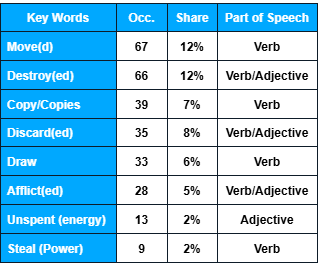
Below is a list of eight synergising kw whose progression I keep track of. Note that the occurrences column here for the Move, Destroy and Discard rows does not include occurrences of the corresponding KWs.
Now let's bring KW (dark blue) and kw (grey) together. This time, occurrences in locations have been added to facilitate the comparison between this classification and Primary Functions. When both are merged, one can see they have pretty much the same synergistic potential overall: 285 occurrences for KW versus 293 for kw when On Reveal occurrences are excluded. (The latter skew the comparison as many cards of that type may not be used in combos.)
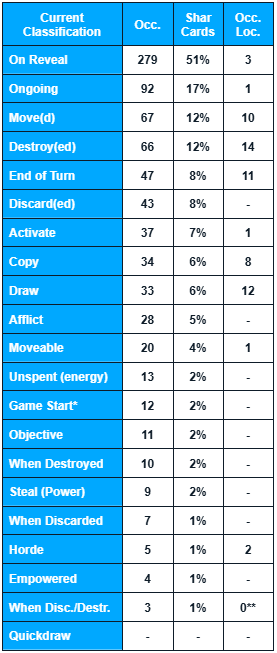
* One could argue that Quicksilver should have its text updated to feature the Game Start KW to align with Shang-Chi Master's Ten Rings.
Artificial Flavors
Flavor is another issue that doesn't receive enough attention.
In the present context, flavor refers to liberties taken from the norm when formulating a card's text, whether deliberate or not. Typically, the purpose of such liberties is to reference the character's ability or personality in the comics as a wink to the player base.
Now, consider the coexistence of Revive (Adamantium Infusion, Firelord, Phoenix Force, Elixir), Resurrect (Fenris Wolf, Hela, Archangel, Khonshu), and Bring back (Ghost Rider), which all have with the same meaning, mechanically-speaking, and Return (Morgan Le Fay and Khonshu, again), which distinguishes itself by sending cards back in your hand rather than onto the battlefield. That nuance notwithstanding, could such flavor have been generated on purpose? Without any available rationale, one may doubt that.
When I suggested to the developers that the first three should be merged in a single KW, the shorter Revive, I did not get a reply, unfortunately, but another player did take the time to share their point of view. They argued that "just because [the KW can be updated] doesn't mean they should", arguing that "creative and flavorful text is nice to see" and that "if flavor text doesn't lose clarity, then don't fix what isn't broken."
My suggestion was not about fixing anything, however. It was about identifying an opportunity to tighten things up conceptually for the sake of potential synergy.
That fellow Snapper wasn't wrong as much as they didn't seem to consider that, besides affecting consistency, flavor can actually hinder potential synergies by making those possibilities less obvious. Functionality must take precedence over originality at all times when drafting or updating a card's ability.
In some situations, there’s no issue with favoring flavor over consistency. Bruce Banner, for example, wouldn’t be open to new interactions if 33% chance to HULK OUT! instead read 33% chance to transform into the Hulk. It is also perfectly fine that Makkari runs and Angel flies from one's hand instead of adding themselves to locations. But imagine if Revive were a kw. A card could then be designed to prevent discarded and destroyed cards from coming back, if the meta ever called for it (it definitely has in the past!).
Primary Functions
Have you ever come across an enlightening but now outdated post on Reddit titled Card and Location Functional Action Reference List? It is the only work I know of that could be compared to mine. By populating their list, the poster's intention was to bring cards and locations together through their function, using a common language. However, their intentions were never to encompass all locations and cards, as much as isolating recurring functions among the game's two core elements.
Below is a comment this user received:

Source: Reddit
Identifiers (proper nouns) on the cards themselves probably won't ever happen. However, I agree with the need for using proper nouns, and that is why the Primary Functions classification is built around that necessity.
As stated in the introduction, Snappers would benefit from a system that organizes all cards and locations through a shared set of identifiers based on how they impact matches. The current classification fails to do so, while the Redditor's work is only a step in the right direction. After much brainstorming and discussions with other players, I came up with these 25 labels (all nouns or compound nouns):
- Power Generator: Adds Power to itself if/when condition is met
- Power Distributor: Spreads Power among cards or locations' totals
- Basic Power: Adds Power to a single location's total (and not much else)
- Disrupter: Interrupts, alters or restricts the ability of cards or locations
- Copier: Copies the stats and/or text of cards OR the cards themselves
- Mover: Moves cards or itself
- Power Reducer: Subtracts Power from cards
- Destroyer: Destroys or banishes cards
- Hand Card Creator: Creates cards in hand
- Modifier: Sets Power and/or cost OR changes stats and/or text of cards permanently
- Location Card Creator: Creates cards at locations
- Energy Generator: Adds extra Energy to subsequent turn(s)
- Discarder: Discards cards
- Repeater: Reproduces card abilities
- Card Placer: Brings cards from hand into play (without them being considered as played)
- Cost Reducer: Reduces the Cost of cards
- Reviver: Brings back discarded or destroyed cards in hand or in play
- Strategic Asset: Provides an edge to the player through additional information or capabilities
- Power Stealer: Subtracts Power from cards and adds that much Power to itself
- Card Swapper: Replaces cards for other cards
- Deck Card Creator: Creates cards in deck
- Card Drawer: Draws extra cards from deck
- Location Swapper: Changes locations for new ones
- Defender: Prevents the destruction or stats modification of target cards
- Bouncer: Brings cards in play back in hand
If the language used seems uninspired, know that this is deliberate. Using simple words limits ambiguity and makes it easier to understand the functions at first sight. Overall, it makes the nomenclature more accessible—especially for players whose native language is not English.
On another note, it is important to mention that this classification system isn't meant to be definitive, just like the KW/kw classification. It reflects the current state of the game at this given moment in time. It is absolutely possible that the release of cards with novel abilities require the creation of new elements.
As mentioned in the introduction, what adds an extra layer of relevance to this classification is that it was built with locations in mind from the beginning: only four of the primary functions are exclusively intended for use with cards. Indeed, no location generates or contributes to stealing Power as they have none themselves, they only calculate it (Generator and Stealer); locations that change locations for other ones operate as disrupters as the change doesn't result from either player's action (Location Swapper); and they can't act as assets because they are shared by the players (Strategic Asset).
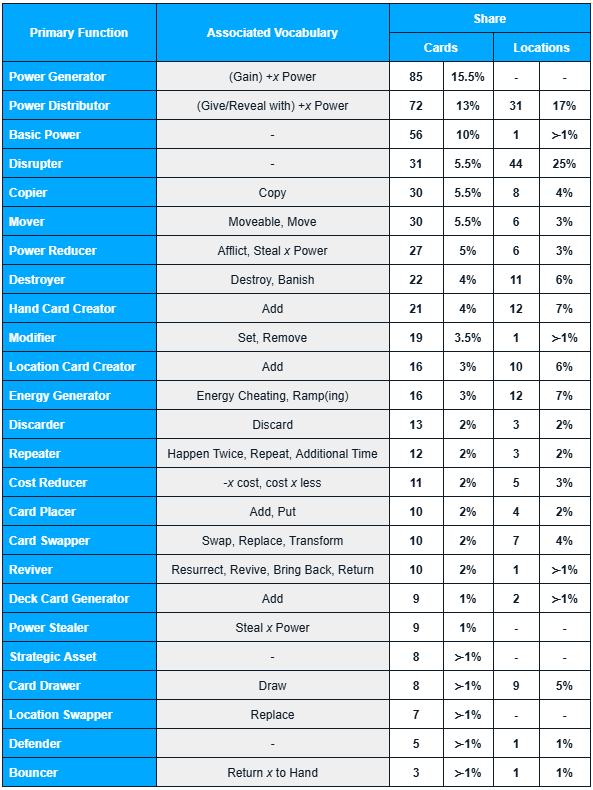
Got You Covered
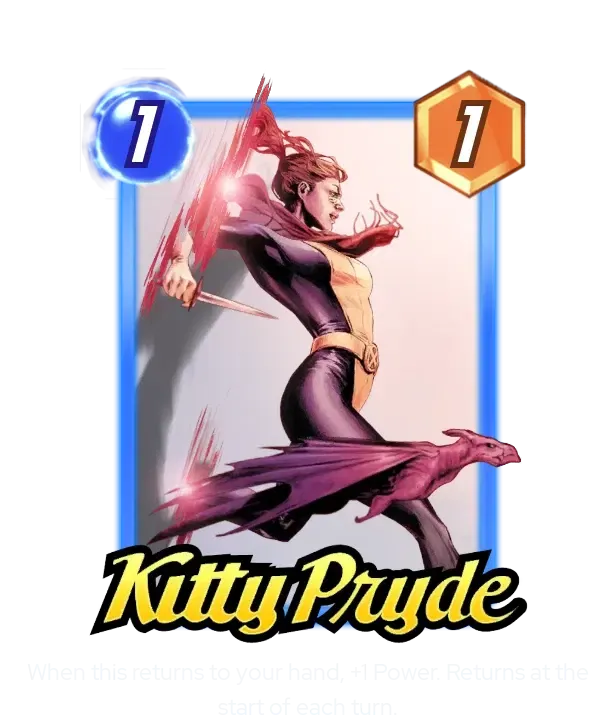
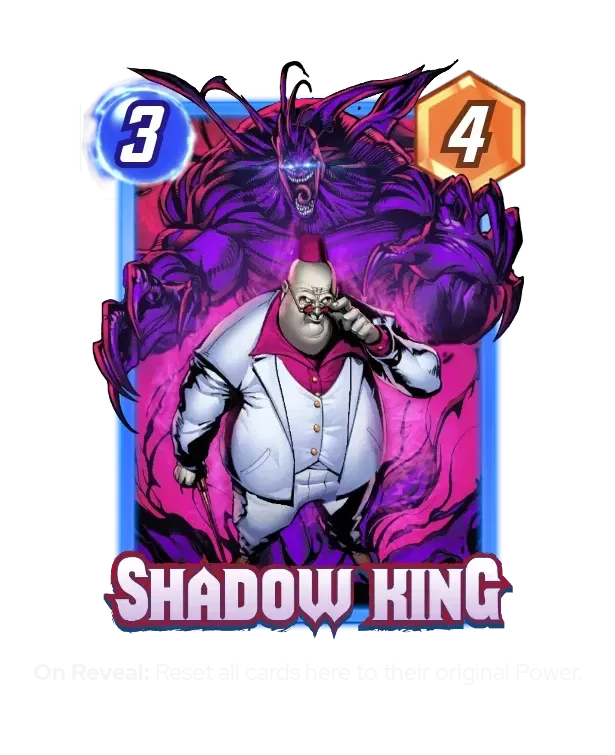
The main issue undermining the KW/kw classification is the number of orphans it leaves behind. Indeed, many cards are devoid of any KW/kw (7%), and the situation is far worse for locations (47%).
Here's just a sample of popular cards not covered:
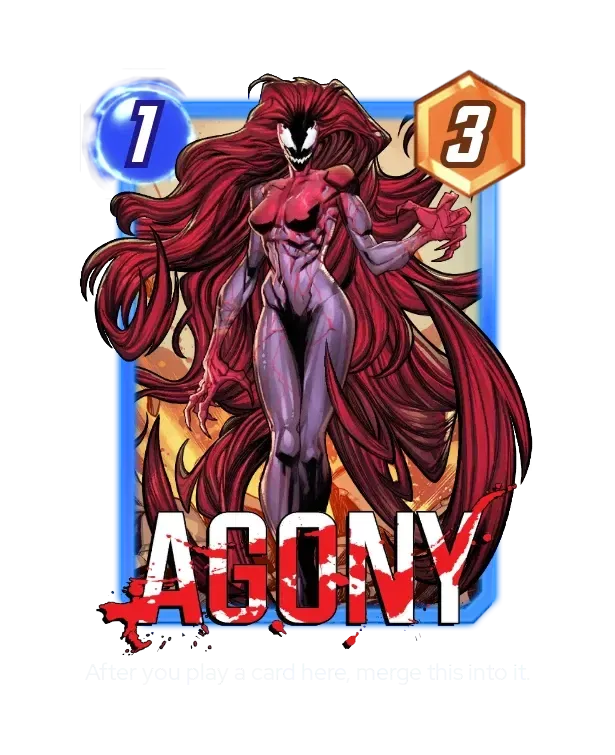
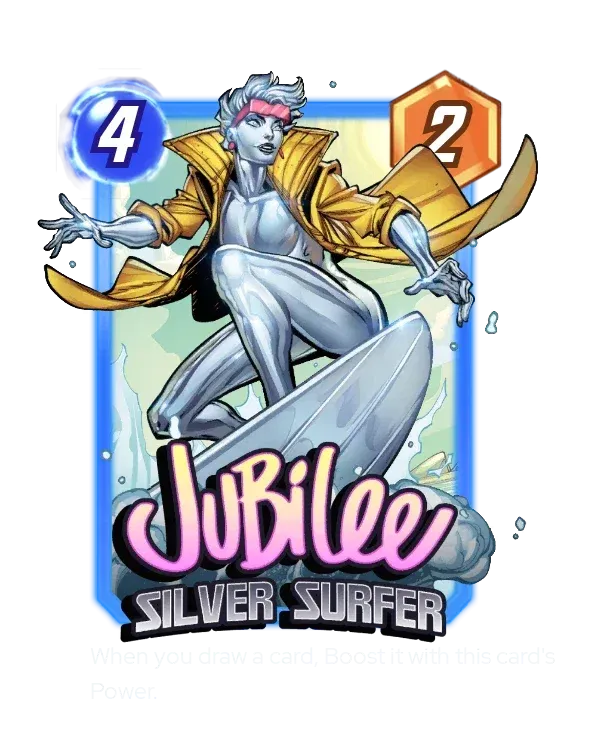
Here is how the current classification fares compared with Primary Functions:
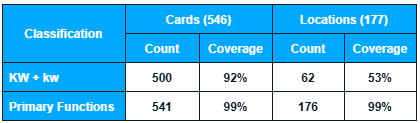
Obviously, meme king Jonah J. Jameson won't find a home within my classification. H.E.R.B.I.E and Nico Minoru won't either, simply because their ability changes with every turn. Two of the three available versions of Nathaniel Richards are also left behind, because their abilities are unknown before the game begins (Kang) or before they're played (Rama-Tut). Fogwell's Gym (Both players get double Boosters this game) is the only orphan location.
About the Current Location Coverage…
53% is surprisingly low. Could rewrites help? Definitely. However, the need to edit locations' texts has very little to do with outdated texts (that haven't been adapted to feature KW introduced after their release) or flavour either. Indeed, by simply adding On Reveal and Ongoing identifiers to locations that behave as such, coverage would more than double (62 to 130).
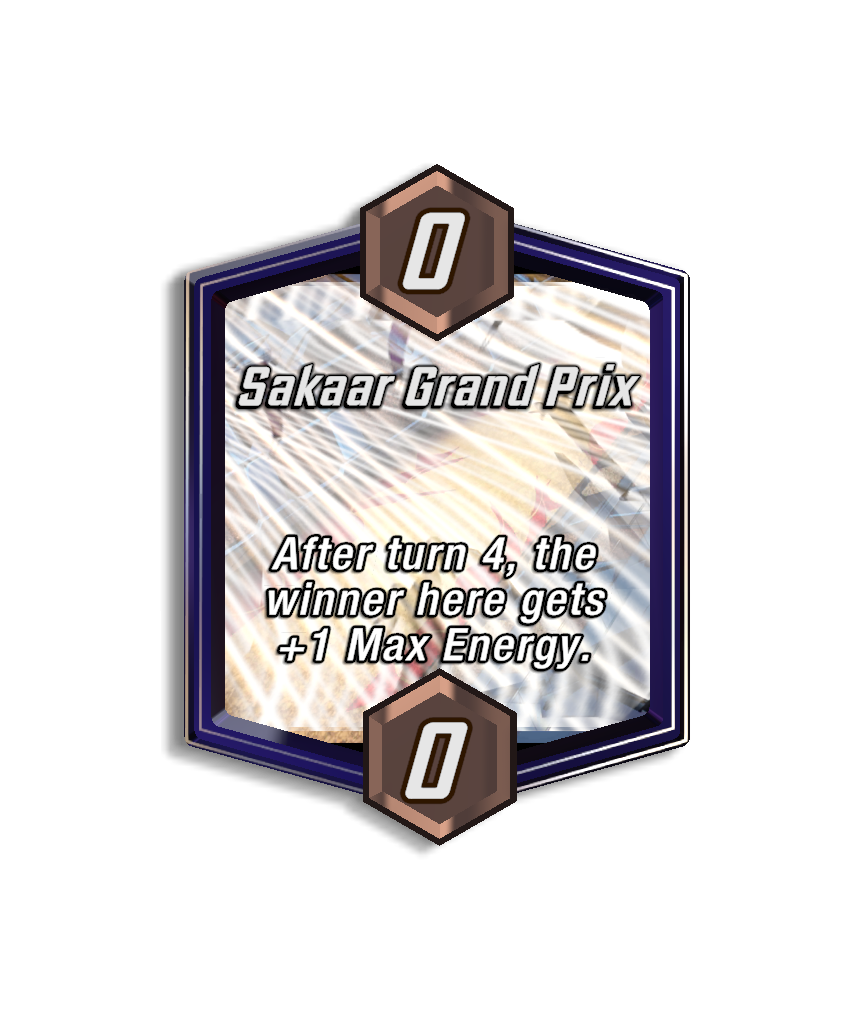
That's not insignificant, however it wouldn't be enough to even bring the coverage to 75%. Adding the only potentially compatible KW left, Objective, to the 4 orphaned locations below would bring us to this symbolic threshold, but that would require major rewrites.
In any case, 75% still isn't enough.
Conclusion
The existing system of keywords (KW) and key words (kw) serves a purpose, but it proves more useful when deck-building on one's own than when engaging in discussions. My proposition has been designed for both contexts. I'm under no illusions that this nomenclature will be adopted by the community, but I firmly believe that it should! I envision it being most useful as a set of search filters on dedicated websites.
If you share my perspective, then please help by spreading the word! Of course, a continuously updated database where one can browse freely is essential, and it is why I'm making my personal database publicly accessible to anyone here. Currently, it is organized as a spreadsheet, though I'd like to move to a more practical interface eventually.
In addition to the material value of a unifying language, the primary takeaways of are this essay are as follows:
- because the use of bold text on cards, whose purpose–which remains somewhat of a mystery–can be misleading by generating an illusory value differential between KW and kw, it should be abandoned without any impact on players
- having KW that don't synergize is not a critical issue, but it is definitely a faux pas that feeds on said illusion
- despite its young age, Empowering would benefit from a rework to reach a level of simplicity and consistency in line with the other KW
- considering the fact that Snap uses KW for locations too, Ongoing, On Reveal and possibly Objective should be added to those whose effect operates as such
- on a more general note, it is absolutely possible to re-write card abilities without giving the community a hard time, and such reworks could prove mutually beneficial
- a special attention must be given to the flavouring of card texts as it may generate interference in a game that relies on interactions like Snap. Some future-proofing rewrites could be warranted.
A very special thanks to Shea without whom this text wouldn't be the same.
I would also like to thank Josh from SnapComplete, BlueSkySnapper and LaurenWhatevsfor their precious feedback! Special Thanks to Snap.Fan for card art found throughout this article. This text is definitely a team effort 🖤
I hope you enjoyed your reading. Find me on the Fourth Location Discord server (ambedo0432) if you have any questions or wish to discuss some elements further!