
When Do I Snap?: Snapping Scenarios and Tips


The springboard for this article was the great conversation Lauren and I had with Roram for Series 6. Everyone always says Snapping is an important skill to reach Infinite or climb post-Infinite. But when should you actually Snap? How can you get better at it? Whether you are a seasoned player that wants to improve or a beginner that is afraid to even engage with the Snapping mechanic, you’ll find tips here that will make you think and evaluate your own Snapping and get you Snapping MORE!
You can check out the conversation with Roram here:
Snap Scenarios
Snap on your win-con
When you have what you need to win, Snap! This can be when you have your win condition in hand or when you have set up what is needed for your combo. Examples include having Ravonna and Mr. Negative in hand, having Limbo out with She-Hulk and Infinaut in hand, or having Maverick ready for Turn 5 with Shou-Lao ready to follow.
Snap on winning percentages
If you have a high percentage chance to win, Snap! If your opponent has 6 cards on board and a Gambit hit on 5 of them wins you the game, you should Snap! A little harder for some mentally would be to Snap when all you need is your card to survive the Danger Room on Turn 6. You have a 75% chance to win, you should Snap on that!
A bit more muddied is how often you should Snap on a 50/50 or less. What is the expected value of a Snap? You may have heard us say that the expected value of Snapping on a 50/50 is positive. There's some logic to that. If you are in a true 50/50 situation and you Snap, there is a chance your opponent will retreat, which turns a 50% chance of winning cubes into 100%.
However, what this doesn't take into account is why people stay and why people retreat. If your opponent retreats, it's because they didn't feel like they were in a strong position. However, if they stay on a Snap where you think it's a 50/50 and they stay, they believe they are in a stronger position. Essentially what you are doing is biasing the sample in your opponents’ favor by Snapping on 50/50s over a large enough sample size. The conventional wisdom of Snapping on 50/50s being positive EV is over-indexing fold equity.
While pure math says you’d snap at anything over 50%, real gameplay skews outcomes because opponents retreat when behind and stay when ahead, making 50/50 spots usually negative EV. A 50/50 can be profitable only if cube gains outweigh losses, but that’s uncommon, so the goal is to snap when you likely have an edge and your opponent doesn’t realize it yet.
Snap before your surprise play
If you've got a flashy or surprising play, Snap before that. This is truly one behavior the differentiates a new player from an experienced Snapper. Snap before the Negasonic unexpectedly blows up their Evolved Cyclops. Snap before your Cosmo shuts down their Star-Lord. Far too often I see players make these kinds of plays (and then emote), only to see their opponent walk away leaving them with a single cube.
Sometimes this is easier said than done. You're not sure your cool play is going to line up. But you have to develop the bravery to Snap before the type of plays that no one stays in following.


Snap when you’ve mapped out your gameplan
If you see a clear path to victory, Snap. Mapping out your gameplan and win conditions (early!) is a great habit on its own to improve your game. When you find the winning line, Snap! You have a plan. You're going to play Invisible Woman and Cosmo onto your Jocasta lane on consecutive turns. You'll have priority, so they won't have a chance to sneak in a Cosmic Ghost Rider. You see the plan unfolding. Snap!
Snap on favorable locations
I'm not saying you should just blindly Snap just because the locations are in your favor, but it can be a big piece of the puzzle. If you have a set of locations that favor you, consider Snapping before your opponent figures that out. A common example is a deck that can get into closed-off locations versus one that can't. Some decks cope with this better than others.
This is especially important if you've specially built (or found) a deck just for a hot or featured location. The reason some people climb like crazy isn't just because of increased win rates on these days. It's also because they know to leverage those increased win rates for higher cube gains.
Snap on favorable matchups
The great example Roram gave in the video is when you're hunting a particular deck. If you’re playing a Supergiant deck that was specifically made to feast on the most popular Star-Lord deck, you need to be Snapping whenever you run into that matchup. You might not win all of them, but you will maximize your cube gains across a large enough sample size if you Snap aggressively against matchups you know to be in your favor.
This can also come in handy on hot location days or new card release days. If you're the kind of person that loves to play a deck that can shutdown the prevalent strategy on a given day, you should also be Snapping to take advantage of it. Increase your hunting yield.
Snap to charge your opponent to see your play
This goes hand in hand with Snapping before your surprise play. You know something they don't. That gives you an advantage. Take full advantage of that knowledge disparity and get some equity out of it.
Are you playing a surprise card that you know can shift the match-up? Don't just give that information away for free.
This is even more clear in closed-deck tournament play or Conquest. If I have a card that totally destroys my opponent’s strategy like an Enchantress, Shadow King, or Cosmic Ghost Rider, something that helps a lot in a particular matchup, then I don't want to show that without getting a lot out of it. I'd rather retreat on a 50/50 or even 55/45 for 1 or 2 cubes when I can save it to win more cubes. I want to Snap before the first time I reveal it in a given match. Make your opponent pay the toll to see that card.
Snap from intuition and experience
I regret to inform you, this is the most important aspect of Snapping at a highe level. When you have a lot of practice with a deck, know its play lines, and have been in countless situations with that deck against dozens of opposing archetypes, you will know when you have an advantage and can leverage that with a Snap. A large part of this is experience and repetition. The more reps you have with a deck the more comfortable you will be with Snapping. Another aspect of this is knowing your output. Knowing what numbers your deck can hit will help you understand if you're going to win.
Snap on information
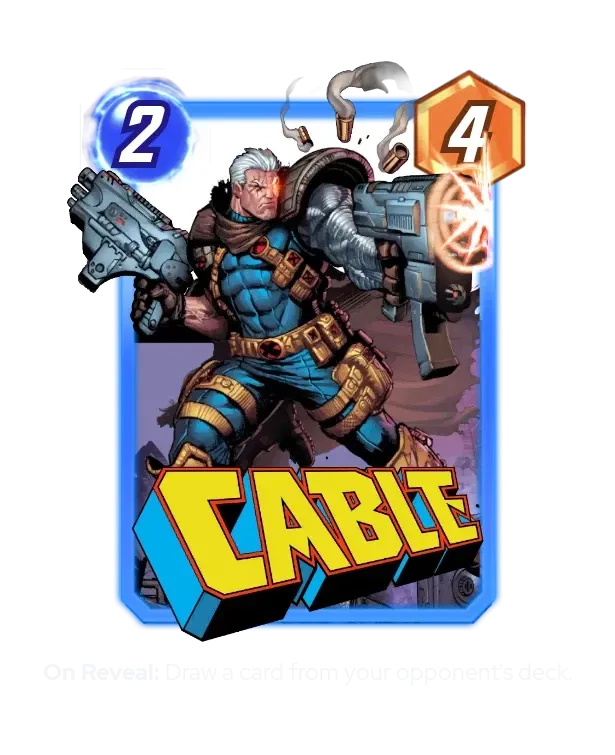
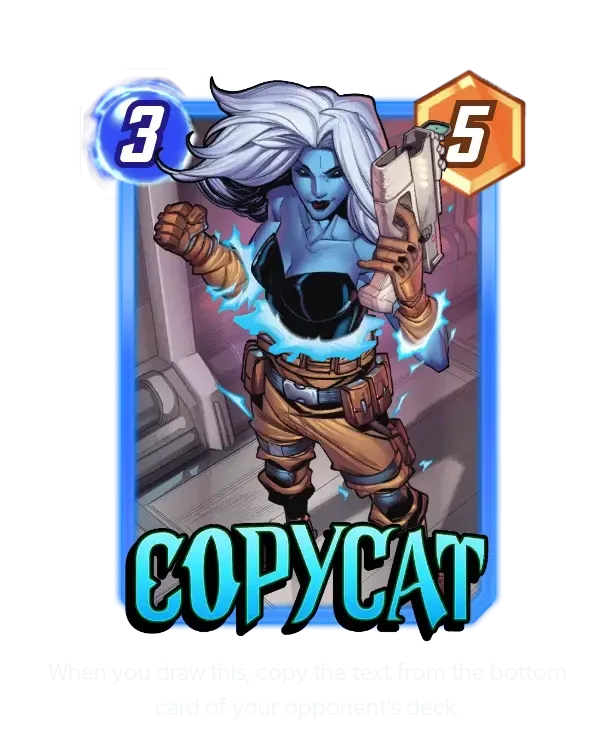
A lot of the above situations hinge on asymmetric information, but there are a lot of different ways an information disparity can come about in this game. Some cards are great for this. Cable can show you if you've stolen your opponent's key card, while Copycat can show you if it's on the bottom of their deck. Weirdworld can sometimes give you a card your opponent can't do without. The same can happen with a lucky hit from the Peak or Sokovia. If you see your opponent won't have access to their Hela or Mr. Negative you should Snap! Sometimes your opponent will be able to scrape out a victory in these games, which makes it even more critical to Snap when both have a clear advantage. Waiting only increases the risk of a loss, but doesn't increase the odds of more cubes for you.
Yes, you can Snap when you get some extra information that shows you that you have an advantage, but it's also a great time to bluff Snap! That leads us to…
The 3 B Snaps
Bluff Snap
Bluff Snapping requires two people to work. You have to be able to read a board state and you have to have an opponent who can do the same. Bluff Snapping honestly doesn't have much value at lower MMR levels, but they're a powerful tool to erase possible cube losses in the right hands. The upside is a retreat, while the downside is massive cube losses. Use with caution, but don't be afraid to experiment with bluffing if you really want to improve.
Bully Snap
Bully Snapping involves pressing your advantage to force your opponent out of the game. Sometimes something unexpected happens that puts you in a dominant position. Sometimes the best thing to do is Snap to ensure your cube gains. If you don't, the opponent can stay in and just wait to see if things shift back in their favor. But they're never going to stay if things don't change. By not Snapping on a dominant board state, you are letting your opponent play out the string for a possible comeback with no downside to them and risk only on you.
Boomer Snap
Initially meant to be a bad Turn 6 Snap that chases your opponent out of the game, it's come to be shorthand for any Turn 6 Snap. This is a bad habit that new players often need to break themselves of, but there are times this is actually optimal, even at high levels. For example, imagine you have Jocasta, Invisible Woman, Prodigy, and Cosmo all in a lane. Basically you are going to win for sure if you have access to any End-of-Turn scalers. You know it. Your opponent knows it. But maybe you got incredibly unlucky and the bottom 3 cards in your deck are all the ones you need. The odds are so low that your opponent will believe you've “mistakenly” Snapped and they'll retreat, giving you free cubes. You should only Boomer Snap on board states that are so obvious you can count on your opponent reading it the same way you are. Even then, there is still a risk they'll stay in and you'll be out 8 cubes, so you better be sure!
Read Your Opponent’s Snaps
Nearly as important as when to Snap is the ability to read your opponent’s Snaps. After an opposing Snap, stop and think what it communicates. Why are they Snappin? What could it indicate they have? Are they Snapping on what has happened or what is about to happen? Asking yourself these questions will help you win more, retreat more appropriately, and lead to increased cube rates for you.
Also critical to consider is what an opponent staying after your Snap might mean. Do they have an out that way you don't see? Be careful of an opponent that Snaps back. Try to figure out what it means. Did you just play Ravonna, have Negative in hand and your opponent Snapped you back? That might mean they are fully prepared for you and have a Mobius.
Retreat Appropriately
Not everyone has a problem with Snapping enough. Plenty of people play too aggressively and need to retreat more! Be self-reflective and understand your personal needs. These are just general guidelines to get you thinking about your Snap and retreat habits.
Final Thoughts
The Snap mechanic can feel like a chore to engage with if you're not confident with it. The more comfortable you feel about Snapping the more joy the mechanic will bring you. Special thanks to Roram for the conversation and be sure you catch him on Twitch.